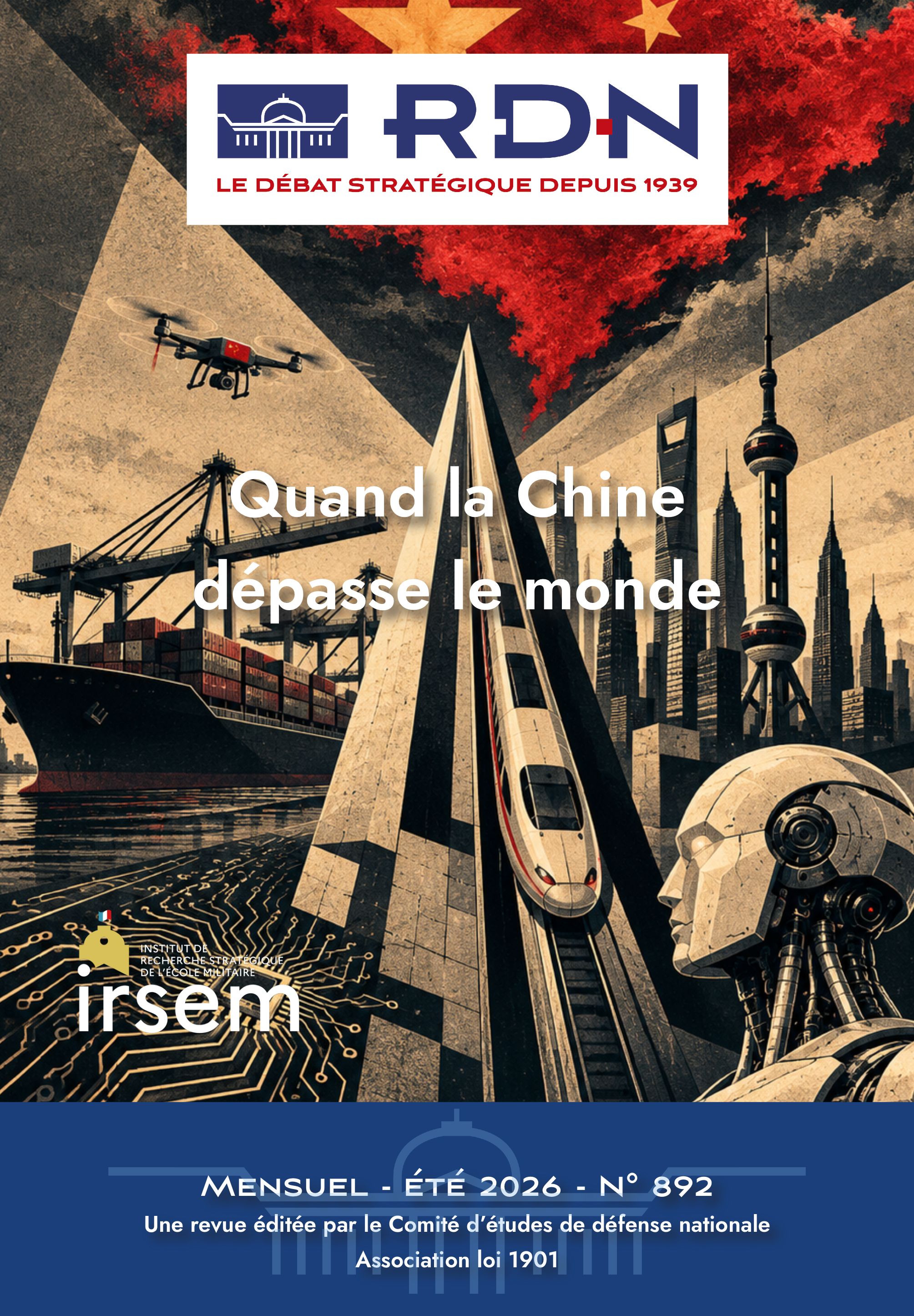
The author describes the strengths and weaknesses of China, a real, yet still fragile, world power. The country is playing on these very strengths and weaknesses in establishing itself as an atypical superpower through sheer weight, using its Western influence on the one hand and its fundamentally Chinese culture and history on the other.
China: an Atypical Superpower
For 30 years, China has been forging ahead with an extensive development programme, and is now positioning itself as one of the global powers of the twenty-first century. There is nothing unusual in such a rise: history offers many similar examples of ascending nations grasping the baton from those on the way down. But this Chinese emergence differs from earlier phenomena, all of which arose in Western scenarios and from the outcomes of war. For a start, it has followed the Asian model, proof against Western attitudes, and therefore a unique power. But what distinguishes it from that which history has led us to expect is the ‘XXL’ effect, multiplied by its suddenness: an atypical giant has erupted into the structured and established world of international relations, be they political, economic or cultural.
Already, and while the consequences of the emergence of a Chinese global power have far from peaked, its impact on our world marks the beginning of a new era for humanity. We have barely begun to realise this, nor, more importantly, to start worrying about it: for ourselves firstly, Western nations for whom the rise of China highlights our own relative decline; and then for the future of the world, of which China could ultimately take the lead. If current growth trends continue linearly for 30 years, China will attain the status of dominant superpower. And, along with what we think we know of the Chinese, of their desire for revenge, their insatiable economic appetite, their demographic weight and a certain indifference towards humanist values, such a hypothesis is alarming.
This premise is in fact more than alarming: it leads almost inexorably to a clash of powers, to an inevitable conflict between the Chinese and American empires. And it is more credible than it might seem when viewed against the usual criteria, widely propounded by geopolitical and economic specialists on both sides of the Pacific Ocean.
Il reste 94 % de l'article à lire