Defence manufacturers are looking at the best ways of meeting the operational requirements that have emerged from lessons learned in asymmetric engagements. This article describes the solutions worked out by the Safran group to ‘digitize’ the infantryman and develop vehicle electronics (vetronics), keys to a better coordination of the ground segment in air/land operations.
Digitizing Warfighters end Vehicles
The fast-evolving international situation means that the defence industry is keeping a very close eye on the operational requirements of our armed forces. Based on feedback from current asymmetric conflicts, they have reached the conclusion that effective coordination between forces on the ground, fragile and scattered within civilian populations, and brutal, irreversible airpower, has become the absolute prerequisite for success—and even for survival!
While major efforts have been expended to increase the effectiveness of munitions, weapons and aircraft, little has been done, as the defence industry is well aware, to equip our ground troops with the resources needed to coordinate their actions with air support.
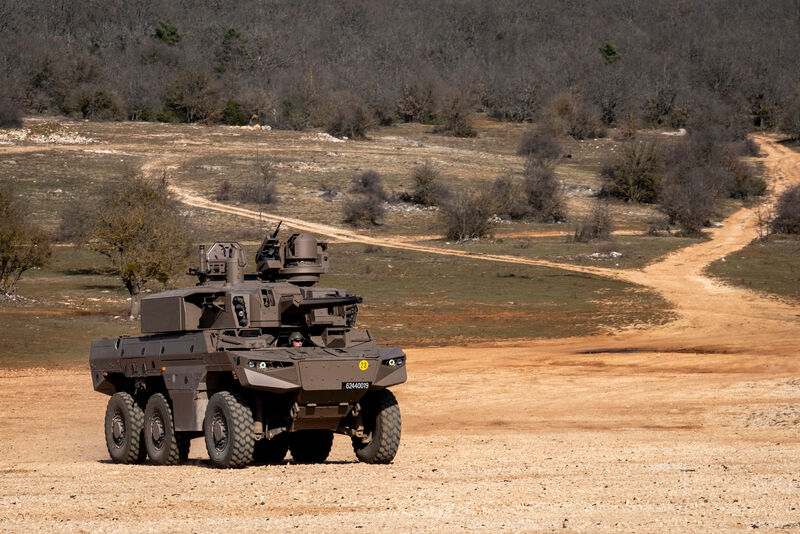
The Safran Group, a major supplier of aircraft equipment and systems, is of course highly aware that aircraft have long been ideal platforms to mount observation, designation, fire control and communications systems that are both powerful and accurate. Subsidiary Sagem Défense Sécurité, a recognized specialist in ground equipment, especially for dismounted soldiers, has noticed that, until quite recently, ground troops were not really able to integrate and carry analog systems. Today, increasing digitization means that this equipment is quite a bit lighter, and can be integrated in ground and air/land battlefield networks, spanning both infantry soldiers (through soldier modernization programmes such as FELIN) and vehicles (based on the concept of vetronics, or vehicle electronics). What this means is that both vehicles and warfighters can send their information in real time to aircrews and decision-makers on the ground, thus improving the efficiency of support, and also limiting undesirable collateral damage, especially in the case of misunderstandings.
Il reste 88 % de l'article à lire