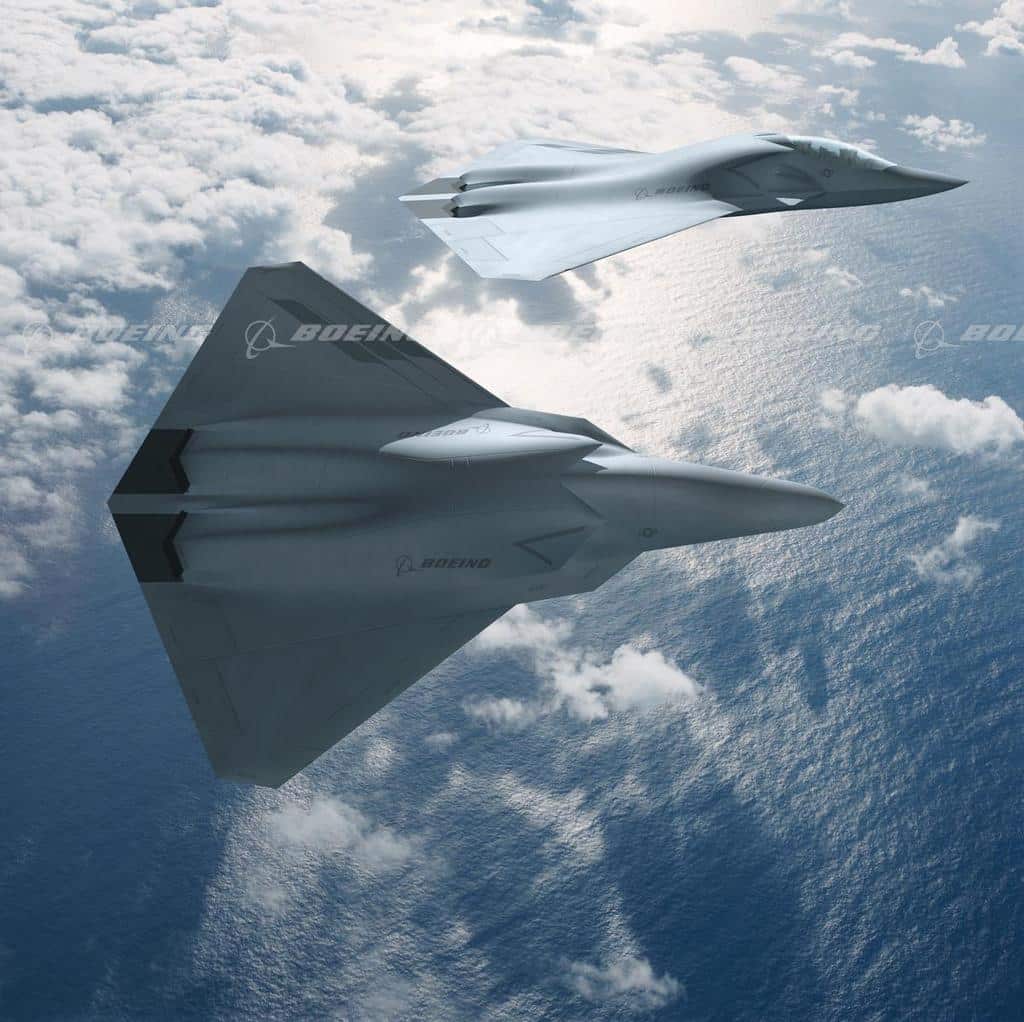
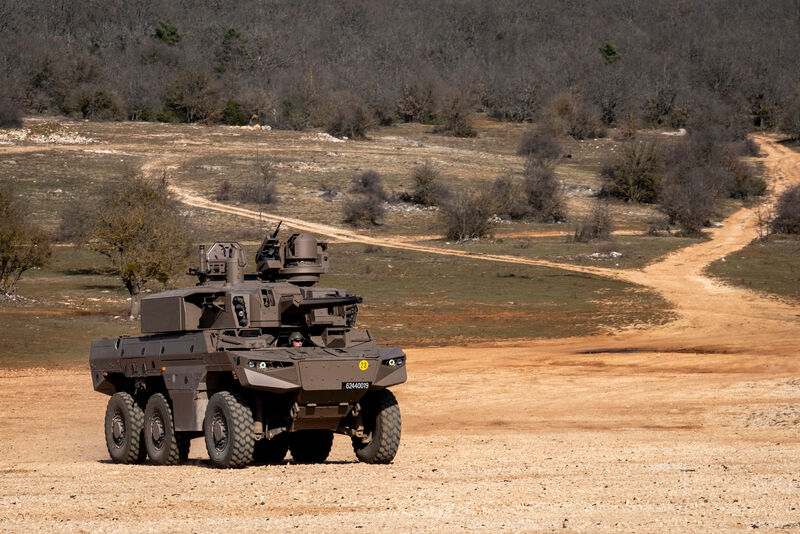
Digital warfare is reshaping the battlefield. Surprise is obsolete, the masses vulnerable, and the tempo fragmented: modern conflicts (Ukraine, the Middle East) demand agility, connectivity, and artificial intelligence. To dominate, sensors, networks, and data must be merged… The challenge is to see first, strike first, and survive longer, before the adversaries do. A technological and doctrinal revolution must be undertaken urgently.
The Transparent Battlefield: Digitally-Driven Disruption in Modern Combat
A New Battlespace Emerges
As in our daily life, digital transformation is already reshaping the character of warfare. The modern battlefield is undergoing a profound evolution. It is no longer only defined by steel and speed—it is defined by information and velocity. Proliferating sensors, connectivity, and precision fires are converging to create a battlespace where surprise is nearly impossible, mass is a liability, and tempo is fragmented.
This is not a theoretical shift, it is operational reality. It is visible in the shattered logistics hubs and the drone-saturated skies of Ukraine and the Middle East, and the electromagnetic fog of modern exercises. The question before us is not whether we adapt, but how fast and how boldly we do so. Because in this new era, the edge belongs not to the strongest, but to the most connected, the most informed, and the most agile.
In the next sections, we will cover the lessons learned from recent conflicts, the available technological opportunities that empower us, the modernization priorities required to maintain strategic advantage at a rate that outpaces our adversaries, and the timelines within which action must be taken.
It is a call to political, military, and industrial leadership to act decisively and collaboratively.
Lessons from Conflict—The Shifting Geometry of War
Over the past two decades, we have witnessed a tectonic shift in how wars are fought. From the urban battles of Mosul in Iraq, Aleppo and Raqqa in Syria, to the high-tech skirmishes in Ukraine and Gaza, these recent conflicts have exposed the limitations of legacy doctrine. In Ukraine, Russian armored columns were decimated not by superior tanks, but by cheap drones, commercial satellites, and networked fires. Battles were fought in Mariupol, Severodonetsk and Bakhmut, not always because of their tactical value from a strict military perspective, but because they were symbolically important and their control consequently had political value. In Gaza, urban combat unfolded under constant surveillance, with both sides leveraging sensors and communications to shape engagements. In the Indo-Pacific, exercises increasingly simulate contested electromagnetic environments, where connectivity is as critical as firepower. Notwithstanding, in all these conflicts, information and psychological warfare, with social media and disinformation, have also become active tools of war.
Three foundational principles of warfare are being eroded:
• Surprise is obsolete: The proliferation of sensors—ranging from radar and acoustic arrays to commercial satellites—has rendered surprise nearly impossible. Movement and concentration are immediately detected, tracked, and targeted. If you move, you are seen. If you concentrate, you are targeted. The only way to counter transparency of battlespace is to use deception at global scale, like the Ukrainian Kherson ruse in September 2022 or the Ukrainian attacks into Kursk in August 2024.
• Mass is vulnerable: Precision-guided munitions, loitering drones, and long-range fires have made mass a liability. Concentrated formations are vulnerable to distributed fires from multiple vectors, often delivered by small, inexpensive platforms.
• Tempo is fragmented. Logistics hubs are targeted by long-range precision fires, disrupting supply chains and forcing operations into bursts of acceleration followed by shaping and deception.
These shifts demand a new doctrine, a new structure, and a new mindset. They imply a redefinition of battlefield geometry—from “rear, close, and deep” to: zones of opportunity, where we can safely concentrate; zones of contestation, where ISR (intelligence, surveillance and reconnaissance) and fires overlap; and zones of risk, where the enemy can deceive and concentrate. Our forces must maneuver not just through terrain, but through the electromagnetic spectrum and the information environment. This calls for a doctrinal pivot toward informatized warfare.
From Battlefield to Battlespace
The proliferation of modern sensors and long-range lethality eliminates the feasibility of the inherited linear model.
First, the loss of defined lines: The vulnerability of concentrated forces to immediate, precise strikes means that the traditional concept of a frontline is not consistent with how militaries should deploy. Instead, adversaries like Russia have recognized the emergence of a fragmented battlefield, where forces expect to fight with exposed flanks.
Second, geometry is defined by reach: The new battlespace geometry is determined less by physical boundaries and more by the reach of enemy long-range systems. This reality means that the battlefield must be understood through overlapping and fluid zones of detection and engagement.
This new nonlinear geometry has profound implications for strategy, doctrine, and force structure, fundamentally changing how ground forces must operate. Typically, the logistics structure designed for mechanized warfare—relying on centralized concentration of materiel in the “rear”—is exceedingly fragile and can no longer guarantee that a force can be sustained. Support areas risk being found and struck by artillery at range, especially if they follow persistent signature patterns. The fight to sustain the force will require significant tactical innovation. This includes using small, dispersed logistics works groups and often requires that combat troops support sustainment operations rather than the other way around, to ensure the safe passage of supplies through the zone of contestation.
The operational tempo of warfare becomes disjointed and discontinuous, moving away from constant high tempo activity, which creates predictable vulnerability. It is characterized by a series of bursts of acceleration to seize key positions, preceded and followed by slow maneuver and shaping battles to gain advantage. Operations are no longer defined by sequential movements but by mutual penetration of forces due to the breakdown of a continuous front.
The command challenge changes from managing linear boundaries to managing the complex interplay of detection and engagement. Commanders must manage the temporal component of the new geometry, where enemy capability denial (e.g., through EW jamming or artillery disruption) creates temporary opportunities for concentration.
Fastest or Faster OODA Loop?
Speed is absolutely a major and critical factor in the evolution of battlespace, but not in the simple sense of constant high tempo or acceleration. Rather, speed is critical in two nuanced ways: the speed of information processing and response, and the manipulation of tempo to disrupt the adversary’s planning cycle.
The fundamental transformation of warfare hinges on the speed at which a force can sense, process, and respond to threats, often encapsulated by John Boyd’s OODA (Observe, Orient, Decide, Act) loop.
The increasing fidelity of sensors and the range and precision of lethality mean that forces must make decisions in mere seconds to react. For commanders engaged in direct action, close and coordinated control is critical, and in counterbattery coordination, seconds can mean the difference between catching an enemy weapon before it displaces and failing to do so. The fire control headquarters must function at the speed of relevance by dynamically assigning fires based on real-time situational awareness.
This capability is achieved through the fusion of multiple sensor feeds and AI classification. A force that fails to modernize its communications risks being left deaf and blind and unable to function at the required speed. In addition, we have to take into account that modern sensors, integrated using open digital architecture, have capabilities that can be updated at the speed of software updates, moving from a decade long procurement cycle to yearly or even monthly update cycles. This capacity for rapid functional change contributes to the overall system speed and competitive advantage.
While speed in processing data is paramount, the overall operational tempo of land forces cannot be continuously high, which makes the strategic management of acceleration and deceleration a critical factor. Indeed, constant high tempo activity creates vulnerability through pattern setting and predictability, hence forces risk exposure and rapid attrition due to modern precision fires. The New Operational Tempo in informatized warfare is characterized by a series of bursts of acceleration, preceded and followed by slow maneuver and protracted shaping battles to gain advantage. The key issue for a force is its capacity to accelerate and decelerate.
Knowledge of the rough timings of an opponent’s planning cycle allows a force to increase the tempo of movement and disrupt the opponent’s planning cycle, causing him to lose initiative or distribute irrelevant orders. Being able to surge activity is, therefore, a useful disruptive capability. The key to success is not to have the fastest OODA loop, but to have a faster OODA loop than the adversary, in order to disrupt its various steps.
In summary, the evolution of battlespace demands speed in sensing and striking (accelerated decision-making in the fires system) for tactical survival, but compels also armies to adopt a methodical, holistic approach at doctrine and training levels, using bursts of acceleration to seize opportunities created by deliberate shaping and enemy system disruption.
Now, here is the good news: the very technologies that disrupt our legacy models also offer unprecedented opportunities to dominate the future fight, if adopted strategically. But these technologies only deliver an advantage if we organize around them. That means rethinking formation, training, and procurement. These are not incremental upgrades; they are foundational shifts. This is a major challenge, as the speed of military institutional change should align much more with the acceleration of technology and the tempo of battlespace.
Digital Technologies: Turning Disruption into Dominance
Sensors are no longer just tools for detection; they are instruments of integration. With AI-powered fusion, we can turn disparate multiple sources into coherent targeting and tracking data. We can see, understand, and act faster than ever before. Winning the sensor fight requires neutralizing enemy stand-in sensors while protecting one’s own and taking full advantage of all the information they provide. Sensor fusion is pivotal to achieving this, but it must be decoupled from hardware procurement. Open data standards and software-defined architectures allow rapid updates, avoid vendor lock-in, and are the key to flexibility and survivability.
Lethality is no longer about brute force—it is about precision, range, and adaptability. Loitering munitions with modular payloads, on one hand, multispectral deception, ambiguity and systemic protection on the other hand, allow us to strike smarter and survive longer.
Connectivity and communication are no longer support functions, they are key issues in a contested operational domain. Network resilience is tested constantly in modern conflict. The electromagnetic spectrum is now a plane that forces must maneuver through and actively fight for advantage in. Networks are the essential part, like in a human body, without a brain and a nervous system, you’re dead and it is then pointless to have bulging muscles!
Enabling Competitive Operations in a Contested Environment
Forces must build three distinct families of networks within a systemic approach: tactical peer-to-peer mobile ad hoc networks (MANETs) without central server controlling the network; Joint fires networks for sensor-to-shooter integration; and C2 data-sharing networks for transmitting finished products.
Beyond having these networks, their individual structure is critical so as to be able to manage the data deluge, ensure resilience against adversarial attack, and enable the fundamental shift in tactical operations.
Networks enable commanders to coordinate dispersed forces and communicate across multiple units. Dispersion is necessary for survivability, as concentration is lethal under modern fires. This dispersed posture only works if the network structure allows for systemic protection and mutual support.
Network structure is critical because it dictates the entire tempo and function of modern warfare in a context environment. Conventional communications are neither robust nor capable of handling the necessary data volume. Failure to modernize the communications structure risks leaving a force deaf and blind.
Managing the Abundance of Data (Signal from Noise)
With the massive proliferation of information producers, generating a volume of data that far exceeds the bandwidth available in traditional networks, there is a saturation risk: Military vehicles are bristling with battlefield sensors, and even civilian infrastructure (streetlights, commercial signs, …) and personal devices are constantly producing data. Traditional hierarchical communication architectures cannot handle the sheer volume of data, especially large data packages like high resolution video flows, without becoming saturated.
To palliate that, prioritization is necessary: The network must manage routing, bandwidth limitations, and emissions control. Because there is far more information available than is relevant, operational units must determine what information they value. The network structure must be designed to contain algorithms (priority stacks) that prioritize the flow of traffic to ensure critical data (like clear voice transmission in contact, or hostile air detections) get through. This prioritization through intelligent automation is a key command and force design decision.
Overcoming the Limitations of Legacy Structures
Traditional rigid communication systems are no longer viable because they are inflexible, limit bandwidth, and expose units to detection. While shifting burden management to a router (hub and spoke model) helped, this centralized model suffered from a single point of failure. If the central hub is hit by a kinetic strike or subjected to directional jamming, the communications architecture can be decapitated, leading to entire units being forgotten by formations if they drop off the network.
It’s why, to counter these flaws, the networks must transition to MANETs or mesh networks for more static nodes. MANETs allow to communicate across dispersed formations without centralized hubs, reduce susceptibility to direction finding, resist jamming, maneuver through the electromagnetic spectrum like a second battlespace, and manage data prioritization through embedded algorithms. Such mobile and mesh network topologies collaboratively route information, increasing bandwidth and resilience as the number of interconnected points (nodes) increases. This means data can find alternative routes if one bearer is denied or reroute dynamically flows based on local software-defined bandwidth optimization.
This is clearly a major revolution for traditional military signal battalions! But in the civilian world, this is used for vehicle-to-vehicle and vehicle-to-infrastructure communication, for instance in the context of autonomous vehicles—cf. vehicle to vehicle (V2V) and vehicle to everything (V2X) communications.
Of course, cyber-attack is a risk: a decentralized MANET, while resilient against kinetic strikes, is highly susceptible to cyber intrusion, especially if external components gain administrative privileges. A strong network structure must include mechanisms for authentication and defensive cyber monitoring. We will develop this in a later section.
Back to the technologies fundamentally redefining the modern and future battlespace, they fall into four main, interconnected categories:
– The foundational technologies: semiconductors, computing power and artificial intelligence (AI);
– The proliferating physical systems: drones and autonomy;
– The integrative systems: data, networks, and command & control;
– The contested domain: electronic warfare (EW) and cyberspace.
The Foundational Technologies: Semiconductors, Computing Power and Artificial Intelligence
The transformation of battlespace rests on the twin pillars of microelectronics and AI, which allow for the mass processing of data at unprecedented speeds.
Cutting-edge chips are the technological foundation required for all advanced military systems, from machine learning to missile guidance and armed drones. The rivalry between the United States and China may be determined by computing power, signifying the triumph of silicon over steel. By the way, let us not forget Europe: although accounting for just 10% of global semiconductor production through companies such as French Italian STM Microelectronics alongside Dutch NXP, Europe plays a critical role through its near monopoly on advanced lithography equipment, as well as specialized chemicals. The miniaturization of computing power allows systems that once filled entire rooms to fit onto a single chip, enabling smart weapons at all levels.
AI is a central issue in strategic studies. It is converging with computing, data, and digital communications to transform human existence, signaling the edge of a Fourth Industrial Revolution. AI is viewed by strategists as a revolutionary development because it magnifies the destructive power of weapons. And mastering it first is believed to change the character of warfare and lead to battlefield dominance.
The Proliferating Physical Systems: Drones and Autonomy
Autonomous and remotely controlled systems, particularly in the air, have become a ubiquitous and defining feature of modern conflict.
Uncrewed aerial systems (UAVs) have evolved from a surveillance system in the late 90’s to a ubiquitous weapon used daily by almost every combatant by 2025. Small tactical drones now provide soldiers with their own “private air force.” The proliferation of drones on both sides of conflicts (such as the Russo-Ukraine War) has accentuated the positional, attritional character of contemporary land warfare, rather than transforming it through maneuver.
Military automation is approaching, with autonomous drone swarms showing significant potential for revolutionizing conflict. These swarms can demonstrate advanced behaviors such as collective decision-making and adaptive formation flying. Autonomous weapons systems are being developed that can identify and engage targets independently of human control. Autonomy is increasingly necessary for systems which operate in high-threat environments where command links are vulnerable.
The combination of precision guidance (enabled by miniaturized processors) and increased sensor fidelity allows munitions to be guided along optimal attack vectors toward a target’s most vulnerable point, irrespective of traditional armor protection. This precision, range, and energy increase means that gains in lethality are advancing exponentially, while protection is only advancing logarithmically.
The Integrative Systems: Data, Networks, And Command & Control
The ability to connect sensors and shooters is transforming command from a hierarchical structure to a rapidly responsive network. While full military automation is often viewed as science fiction, the prime function of AI in current military strategy is the processing of massive datasets. Ubiquitous sensors generate “too much information”, creating a fog of war where commanders risk understanding nothing. AI filters this data to improve military intelligence, planning, situational awareness, and targeting, thus supporting human decision-making rather than replacing it. Uniting diverse data from all services and domains (land, air, sea, cyber, space) empowers commanders to sense, make sense, and act.
The use of commercial networks and COTS products, such as those provided by companies like Palantir and Starlink (SpaceX), has become a force multiplier in conflicts like the Russo-Ukraine War. Dual-use technologies developed primarily by private companies for civilian purposes (like AI and 5G) are now leveraged as weapons of war. The major challenge is to integrate all these products and services, while being able to take advantage of any new commercially proven technology when available. Modular and open architectures are key for allowing successful integration.
The Contested Domain: Electronic Warfare (EW) and Cyberspace
The electromagnetic spectrum (EMS) and cyberspace are defined as continuous areas of active conflict. The EMS is a plane that military units must maneuver through and actively fight for advantage in. The battle for the electromagnetic spectrum is an invisible struggle conducted by semiconductors.
The rise of software-defined radar, radios, and EW suites, combined with machine learning, means that surveying the spectrum can be done constantly, and adjustments to targeted jamming can happen rapidly. This technological speed is critical to denying the enemy the use of their sensors and communication systems.
Projects and Processes—Building the Future Force
So, what must we do? The path forward is clear. We must prioritize five modernization pillars.
Shooters and Munitions—The Indispensable Effector
First, shooters and munitions are a critical priority because artillery remains the primary killer in warfare. It accounts for about 80% of casualties in the Russia-Ukraine conflict. Besides, fires protect the force by providing mass effects and maintaining a ready supply of ammunition and guns.
We need diversified fires: mortars, howitzers, MLRS, and loitering munitions. But we also need industrial capacity. Ammunition stockpiles must reflect the realities of high-intensity warfare. Furthermore, standardization across various calibers is essential. Armies must agree upon and standardize a limited set of munition families, including charge systems and fusing, to ensure compatibility across guns of the same caliber and enable efficient logistics and pooling of munitions.
On the other hand, loitering munitions should retain modular payload systems and variation in form to make them harder to defend against and ensure long-term relevance. So, we have to decide when to standardize and when not.
Sensors: From Acquisition to Fusion
Second, we need sensors. Not because they are scarce, but because militaries lack the means to fuse the collected data or transfer it effectively. Defence must invest in algorithms and data sets to fuse returns from multiple sensors using AI. This requires specifying standards for sensor output and separating hardware from software to allow fusion algorithms to be updated independently.
Sensor platforms should be designed with a clear, dedicated purpose, rather than attempting to maximize collection on a single multirole platform. Furthermore, neglected capabilities, especially electronic warfare detection, must be expanded and proliferated across the force.
Layered Defenses: Survivability in Depth
Third, we need layered defenses to increase survivability in depth. Armies are currently chronically vulnerable to enemy fires, necessitating a regain of layered defense capabilities to counter precision weaponry and missile threats. All formations need organic Counter-Unmanned Aircraft Systems (C-UAS) defense capability to address the economical challenge posed by expensive missiles having to target cheap UASs. Electronic warfare, particularly navigational jamming, is a vital component for disruption.
Fielding a high density of capable short-range air defense units is necessary to protect dispersed forces and shape the enemy. A layered approach (short, medium, long-range systems) is key as it presents enemy aircraft with conflicting imperatives, increasing survivability. This is where the digital transformation dimension is the critical enabler.
Dedicated Urban Formations: Specialization for the City Fight
Fourth, we need specialized units trained in real urban environments, equipped with robotic systems for logistics and fire support, and bespoke C2 tools optimized for non-line-of-sight urban environments.
As shown in Ukraine, in cities, armies must be able to defend and attack, and switch between the two rapidly. The side that can better integrate fires, armor, infantry, engineers and intelligence has an advantage.
To execute such combined arms maneuver, training by harnessing live real-world interactions and virtual environments, is necessary to prepare for persistent uncertainty and to validate necessary force structure adaptation. This is how we avoid costly mistakes and learn to function effectively in an environment defined by transparency, precision and contested connectivity.
These are not optional upgrades. They are existential imperatives.
And now we turn to the last main modernization pillar, which addresses critical digital transformation challenges:
– the connectivity and communication challenge,
– and the data management and exploitation challenge.
This necessitates radical technological and organizational reforms, specifically driving the development of cloud technologies, Zero Trust security models, data-centricity, and fundamentally new ways of managing cybersecurity and reorganizing procurement and acquisition.
These reforms are crucial because the survival and competitive advantage of future forces are determined by the amount and quality of a military’s data and the speed at which it can make decisions.
Communication Management: Agility and Resilience
The vulnerability of traditional hierarchical hub-and-spoke communications to a single point of failure necessitates the shift to MANETs, Flying Ad Hoc Networks (FANETs) or mesh networks. As noted previously, this is essential for coordinating dispersed forces while increasing their resilience by using multiple bearers, making them robust even if one link is denied. This also reduces susceptibility to direction finding in the EMS.
To maximize bandwidth and resilience, military communication systems must be able to leverage civilian infrastructure, like fiber-optic cables, 4G and 5G cell towers and masts, switching and routing equipment, satellite and microwave links. The use of commercial networks has proven to be a force multiplier in operations, such as in Ukraine. The increasing dependence on civilian systems, like Starlink, for assured communications further underscores this trend.
Furthermore, with so much data available, the network architecture must include algorithmically encoded bandwidth prioritization to enforce precedence to mission-critical packets and data. Commanders must determine what information they value and ensure that this signal can be found amidst the cacophony of battle. The transition to smart software-defined communication networks is more than a trend, it is a necessity.
Cloud Technologies: Answering the Call of the Data Deluge
The modern and future battlespace is defined by an immense and growing deluge of data from ubiquitous sensors. Modern military activities and civilian infrastructure produce massive sets of data. For instance, certain operational areas can generate data reaching into petabytes (one million gigabytes). Traditional human-centric analysis methods are no longer adequate, and human analysts simply cannot physically keep up with the amount of incoming data. Standalone data centers are limited by their space and their energy supply. Cloud technology addresses this by providing the vast storage and computing facilities needed to store and process these massive data sets. In short, Cloud technology is necessary to handle this scale and complexity, enabling the fusion and distribution of intelligence.
By Cloud technology, we do not mean public clouds like you might use in your daily life when watching videos, accessing your private mailbox, or logging to your bank account. We mean private and hybrid clouds that offer the same scalability principles with virtualization, automated resource allocation, parallel processing and distributed computing, control over data governance, security, and compliance for sensitive data, while leveraging resources for burst capacity or less sensitive workloads.
Cloud computing turns computing power into a service that allows infrastructure to be flexible and globally distributed. This enables new forms of battle management systems that rely on data being processed at the edge (closer to the user or data source) while remaining connected to cloud servers. Furthermore, in contested environments, cloud services (like provided by Amazon Web Services in Ukraine in early 2022) have been essential for the transfer of governmental data to secure cloud environments, ensuring continuity and resilience.
Cloud environments are also key to providing the necessary infrastructure for AI to automate data processing to filter this data deluge, thereby improving intelligence, planning, and situational awareness, at scale and speed.
Zero Trust: Mitigating Risk in a Hostile Environment
The military environment must assume networks are compromised and constantly contested. The traditional perimeter defense model is critically flawed because once an adversary penetrates the electronic fence, they have implicit trust and access to everything. Zero Trust (ZT), by contrast, operates under the assumption that the network is always hostile. It dictates that trust is never granted implicitly but must be continually evaluated. Thus, it provides the strategic security model necessary to operate effectively in this reality.
The strategic necessity for military forces to disperse for survivability means computing resources are deployed in remote, disconnected, and often hostile environments. ZT is perfectly situated for these edge deployments because it assumes no implicit trust based solely on physical or network location.
ZT’s core functionality is to strictly enforce access control and ensure that, to access any application, every device, user, and network flow is authenticated and authorized. This is vital for cybersecurity because it practically eliminates lateral movement. ZT forces an attacker to steal several identities to gain access to resources, raising the bar significantly compared to traditional approaches.
Furthermore, in a rapidly evolving battlespace where adversaries actively seek to penetrate systems, ZT enables security policies that are dynamic in nature. This includes using variable trust—a numeric value representing trustworthiness—to make authorization decisions. For example, policy can adjust access based on the risk factor determined by attributes like temporal or geographical activity patterns.
Data-Centricity: The Organizational Imperative
The strategic shift required by the evolution of battlespace is centered on leveraging data as the new strategic asset. This necessitates profound organizational and doctrinal reforms to become datacentric. Battlespace evolution is driven by the consensus that data provides the decisive advantage by their amount and quality, empowering commanders to “sense,” “make sense,” and “act.”
However, war occurs in an environment where data will be incomplete, messy, inaccurate, and where the adversary will actively seek to corrupt and poison data. Data-centricity mandates that the focus shifts to curating, organizing, and securing this data. This ensures the force has access to high-quality and trustworthy facts of the business or operational environment.
Becoming data-centric requires a profound institutional reconfiguration. To harness the necessary expertise, the armed forces must forge partnerships with commercial tech companies, becoming a data-centric organization integrating civilian data scientists and programmers into operational headquarters.
New Ways of Managing Cybersecurity
The shift to cloud and data-centric models, combined with the extreme speed of threats, mandates a complete overhaul of traditional cybersecurity tactics. Existing policies, measures and controls, focused on a specific solution, cannot keep up with the pace of digital technology, stifle innovation and ultimately do not deliver security. The focus must be on trusted computing with automation, architectural segmentation, continuous monitoring and compliance.
Since response to cyberattacks, like defensive software against malware, must happen instantly, at computer speed, manual security processes are insufficient and unmaintainable at scale. Automation is crucial for the security response function across all pillars of ZT. AI models are vital for all kinds of cyber operations, helping forces identify infiltrations quickly and respond more swiftly to critical security incidents.
New security architecture must eliminate the old perimeter. The Software-Defined Perimeter (SDP) is a superior design tactic that decouples the authentication/authorization functions away from the sensitive workload and its physical location, creating what IT experts call sometimes a “black cloud”, i.e., a micro-segmented, secure network fabric with small, secure zones to ensure precise control over interactions and data flows.
The highly interconnected and hostile nature of the battlespace demands granular control. It is crucial to encrypt all traffic between workloads and establish trust using mutual transport layer security (TLS), but also to do it at a finer level, at data level, prioritizing data protection over networks, servers, and applications. The network-centric security model is outdated in a modern, distributed and contested environment.
New cybersecurity management is about ensuring end-to-end visibility and observability across the digital estate. This includes continuous monitoring and auditing features that track data access and modifications. To protect modernized systems, security must be built from the start, requiring source code and shared libraries to adhere to strict secure development lifecycle and DevSecOps guidelines. This means implementing security tools that can automatically generate and update security policies across edge environments.
All this is a major change of mindset, encompassing available automation technology as well as changing culture, policies and processes inherited from another technological time. It needs to put the entire accreditation system on a wartime footing with the urgency and mandate to accept more risk, transition from a culture of compliance to one of speed.
Reforming Procurement and Acquisition
All these necessary evolutions will not be feasible in the required time frame, a few years at most, without deep institutional reforms to compete effectively in the global technological struggle. The old Cold War “waterfall” procurement methods, which tie providers into long, highly specified contracts, are archaic and obsolescent for procuring software and AI. Procurement processes have to be revised: they must become more agile and flexible, especially since tech companies primarily develop software, not exquisite hardware platforms.
We have to seek to short-circuit traditional models by identifying a problem and allowing contractors to develop a solution, by themselves and incrementally, instead of giving them upfront detailed reference architectures and constricted designs. In terms of procurement, we have to switch from purchasing a specific platform to defining the contract as a provided evolving service.
Such changes are slowed by institutional interests and entrenched norms. But it is the only way to deal with the digital world where generations are counted in years and not decades: the average replacement cycle for digital technologies and systems is 3 to at most 7 years…
Typically, to exploit AI, the armed forces must undergo profound institutional reconfigurations that are just as important as technological developments. It requires building a new relationship with the tech sector, recognizing the need for unprecedented partnerships between government and industry. This alliance is crucial because the tech primes are indispensable to the development and application of AI due to their concentrations of technical, human, and financial capital. It allows integrating scalable AI solutions across the Departments of Defense, identifying functions that benefit from AI and facilitating collaboration between the armed forces and tech companies.
The armed forces of some nations have already started reforming their organizational structures, doctrine, and command hierarchies to successfully employ AI. This includes embedding new expert human teams (“military-tech teams”) made up of military personnel and civilian technicians from hard and soft sciences to work on operational problems.
Obviously, this cannot be done without a drastic proactive approach, at the highest leadership level, concerning communication infrastructure, computing and storage resources, and change of mindset, policies and partnerships. It is a necessary holistic endeavor triggered by a revolution similar to railroads in the 19th century and electrical infrastructure in the 20th century. And it has to be done before our adversaries succeed, as they abide by different ethical and constitutional rules.
Timelines and Urgency—The Clock Is Ticking
To conclude, we do not have the luxury of time. Technologies are proliferating. Our adversaries are adapting. The window for transformation is closing. The future fight is not waiting. It is arriving—fast, complex, and unforgiving. The window for adaptation is narrow. But we are not passive observers. We are architects of the future force. We have the vision, the talent, and the technology. What we need now is resolve.
Within the next 24 months, we must launch and deploy foundational digital programs: network agility and Zero-Trust implementation, cloud migration, AI agentic-assisted data exploitation. Only by focusing on these enablers will it be possible to achieve full operational readiness for informatized warfare, to be ready to fight and win in the informatized battlespace through integrated formations capable of dispersed, connected, and lethal operations.
This is not just a military challenge—it is a whole-of-nation imperative. Political leadership must provide the mandate. Industry must deliver the tools. Defense organizations must drive the transformation. The future fight will not be won by the biggest army or the most expensive platforms. It will be won by the force that sees first, decides fastest, and adapts continuously. That force must be ours.
Let us commit—together—to building a force that is not just ready, but dominant. A force that sees first, strikes first, and survives longest. A force that wins. ♦
-EN.jpg)