Japan’s Strategy and Security Cooperation with France
Why does Japan need the QUAD? An important feature of Japan’s current strategic policy is its concept of the Quadrilateral Security Dialogue (QUAD) in the Indo-Pacific. Japan was a pioneer in creating the concept of both the Indo-Pacific and the QUAD. It was related with the security for Japan.
China has escalated its activities in the entire area of the Indo-Pacific
Since the 2000s, the security situation around Japan has changed, especially since China has escalated its activities. For example, China has been carrying out naval exercises on the Pacific side of Japan since 2008. In 2021, five Chinese warships and five Russian warships jointly circled Japan. Figure 1 indicates the route the Chinese navy has been using. These activities have expanded the defense line of China from the first island chain to the second island chain.
But China’s assertiveness is a common problem in the Indo-Pacific. Figure 2 indicates that China is escalating the situation with Japan in the same way it is with India. It becomes apparent that China has increased its assertiveness. China’s activities have escalated in the sea around Japan, Taiwan, the South China Sea, the South Pacific, the India-China border, and the Indian Ocean.
Therefore, Prime Minister Shinzo Abe addressed the Indian Parliament in 2007 and announced his views on the Indo–Pacific and the QUAD as a counter-China strategy(1). The Indo–Pacific and the Quad he envisioned had the following three characteristics. One is the need for a way of thinking that unites the Pacific and Indian Oceans, which are undergoing remarkable economic development and increasing their influence. If a major war broke out in Asia now, the entire world would be affected. In other words, Asia has also begun to have a level of influence such that it can earn the title of the center of the world. Therefore, it is necessary to adopt measures that integrate the Pacific Ocean and Indian Ocean, which have newly begun to become a center of world politics. This is the Indo–Pacific.
Second, the region has been threatened by Chinese domination, evoking the need for a counter-concept. The Indo–Pacific includes all countries that have territorial problems with China. The Quad is a group that consists of all influential countries in the Indo–Pacific with the exception of China. As such, the Indo–Pacific and the Quad are useful when considering cooperation among countries as a strategy against China.
Third, it is a concept that highlights the importance of India. The difference between “Indo–Pacific” and “Asia-Pacific,” is India. Within the Quad, Japan and Australia are allies of the US, and if it were only about cooperation among these three countries, there are already many opportunities, so there is no need for a new framework. The reason for advocating the Quad was to get India into the ranks.
The combination of the Indo–Pacific and the Quad as envisioned by Prime Minister Abe was to counter China’s domination by considering the rapidly growing region as one and including India.
What kind of concrete impact?
What kind of concrete impact will the envisioning of the Indo–Pacific and the Quad have in terms of the China strategy? It is expected to have an impact from military, and economy.
Military
The Chinese pattern of territorial expansion demonstrates that the Indo–Pacific and the Quad are militarily effective. For example, China’s territorial expansion in the South China Sea exhibits a pattern of military balance shifting and territorial expansion occurring when a “power vacuum” arises. In the 1950s, when France withdrew its troops from the region, China occupied half of the Paracel Islands. In the 1970s, after the Vietnam War, when US troops withdrew from Vietnam, China occupied the other half of the Paracel Islands. In the 1980s, when the Soviet military presence in Vietnam was reduced, it advanced into the Spratly Islands and occupied six locations. When US troops withdrew from the Philippines in the 1990s, it occupied Mischief Reef(2). When the military balance changes and a “power vacuum” arises, China attempts territorial expansion. Conversely, maintaining the military balance can be seen as a cornerstone of measures against China.
This is where the Indo–Pacific and the Quad come in. China will have to distribute its budget between Japan (to the East China Sea) and India (to the India–China border). If China’s military spending is dispersed, it will be easier to maintain the military balance. Even if China advances into the Indian Ocean and threatens the sea lanes of Japan, the US, and Australia, if the Indian Navy maintains security in the Indian Ocean, the latter three nations will not have to devote so many ships to the Indian Ocean (Figure 3). Cooperation with India is also important in terms of assistance to Southeast Asian countries (Figure 4). Regarding these points, if India is included in the Indo–Pacific and Quad, it will become a major force in deterring China’s territorial expansion.
Economy
Promoting cooperative relations with India in the form of the Indo–Pacific and the Quad will also influence the effectiveness of the economic aspects of the strategy. First, China’s growing influence is related to its economic growth. China has been able to rapidly increase military spending because its economy has grown, and its budget has swelled. This budget is spent not only on defense but also on infrastructure development projects, such as the Belt and Road Initiative (BRI). The host countries are heavily indebted, and consequently, China expands its influence through the BRI. Furthermore, China uses economic coercion against countries that criticize it. For example, when Australia called for an international inquiry into the origins of COVID-19, China delayed imports of wine and lobster from Australia, effectively imposing economic sanctions. In this way, China’s economic strength and the dependence of other countries on trade with China have led to its increasing influence and coercive aggression against other countries, both militarily and diplomatically.
In addition, China’s activities in the Indian Ocean is well related with the economy. Beijing has been intent on solving its “Malacca Dilemma”—a desire to avoid excessive dependence on the Malacca Strait, which is a strategic shipping lane for China’s oil and controlled by the US Navy. As a result, China is creating alternative routes such as a Middle East-Pakistan-Xinjiang Uygur route and a Middle East-Myanmar-China route (Figure 5).
This is why, when considering measures against China, it is necessary to curb the influence of the Chinese economy. Is this related with the concept of the Indo-Pacific and the Quad? In terms of the size of India’s economy, it has the potential to become an alternative to China. India also has untapped rare earth reserves, which have the potential to reduce dependence on China from a supply chain perspective. For example, Figure 6 indicated that the number of Japanese has been reducing in China because there is a risk. Japan needs an alternative market such as India. The Indo-Pacific and the Quad is effective strategy because these are the concept that highlights the importance of India.
Security Cooperation with France
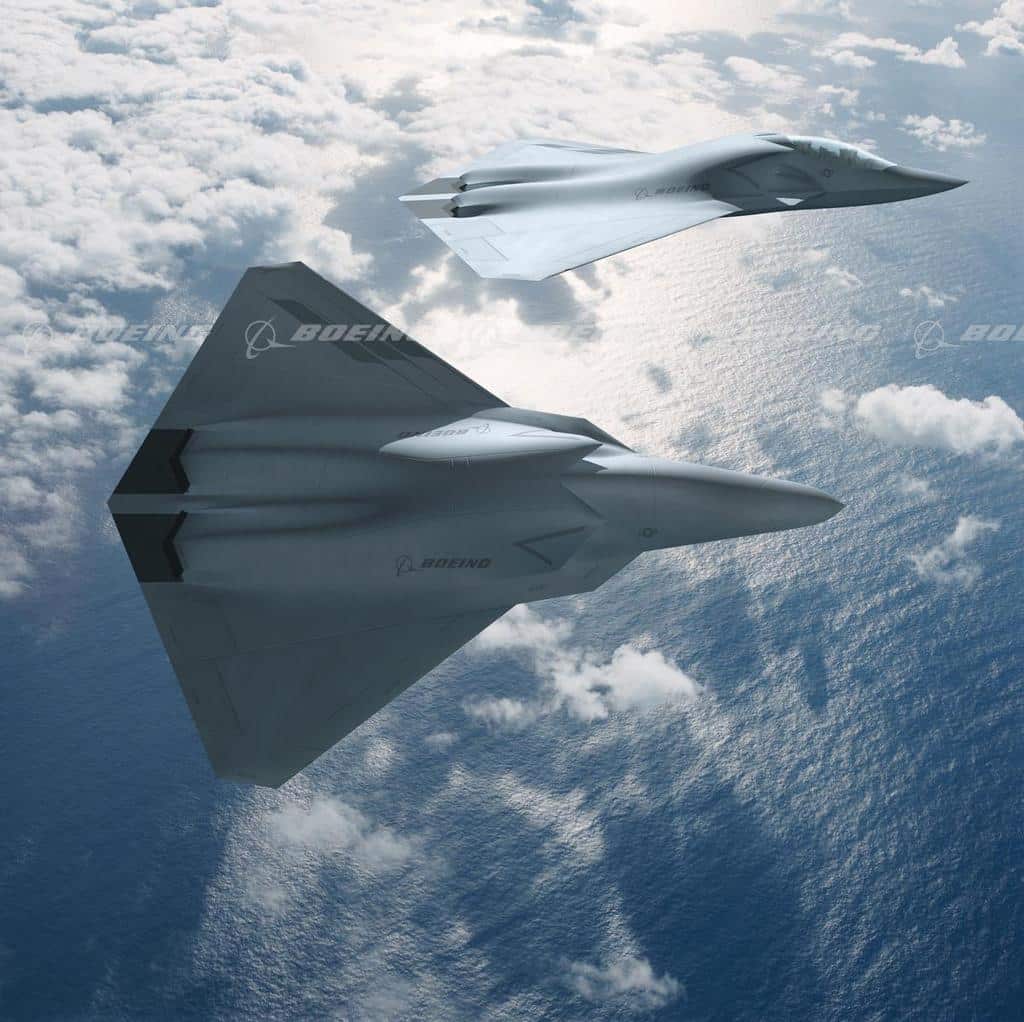
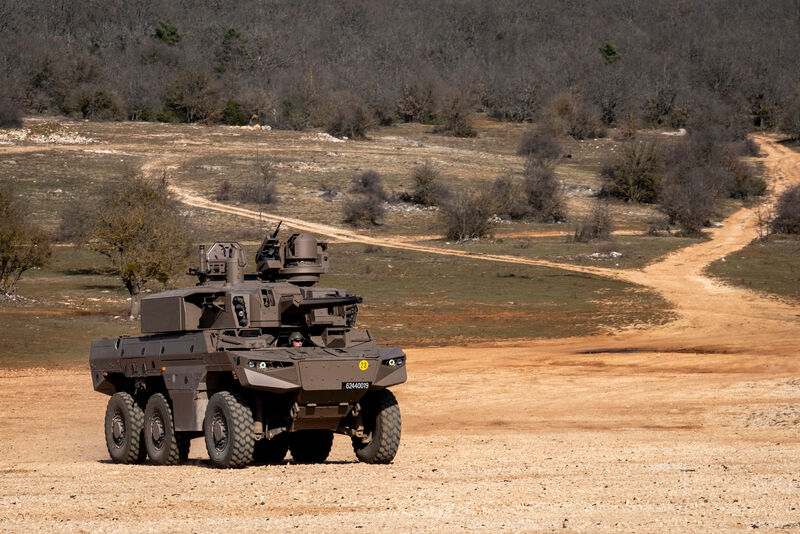
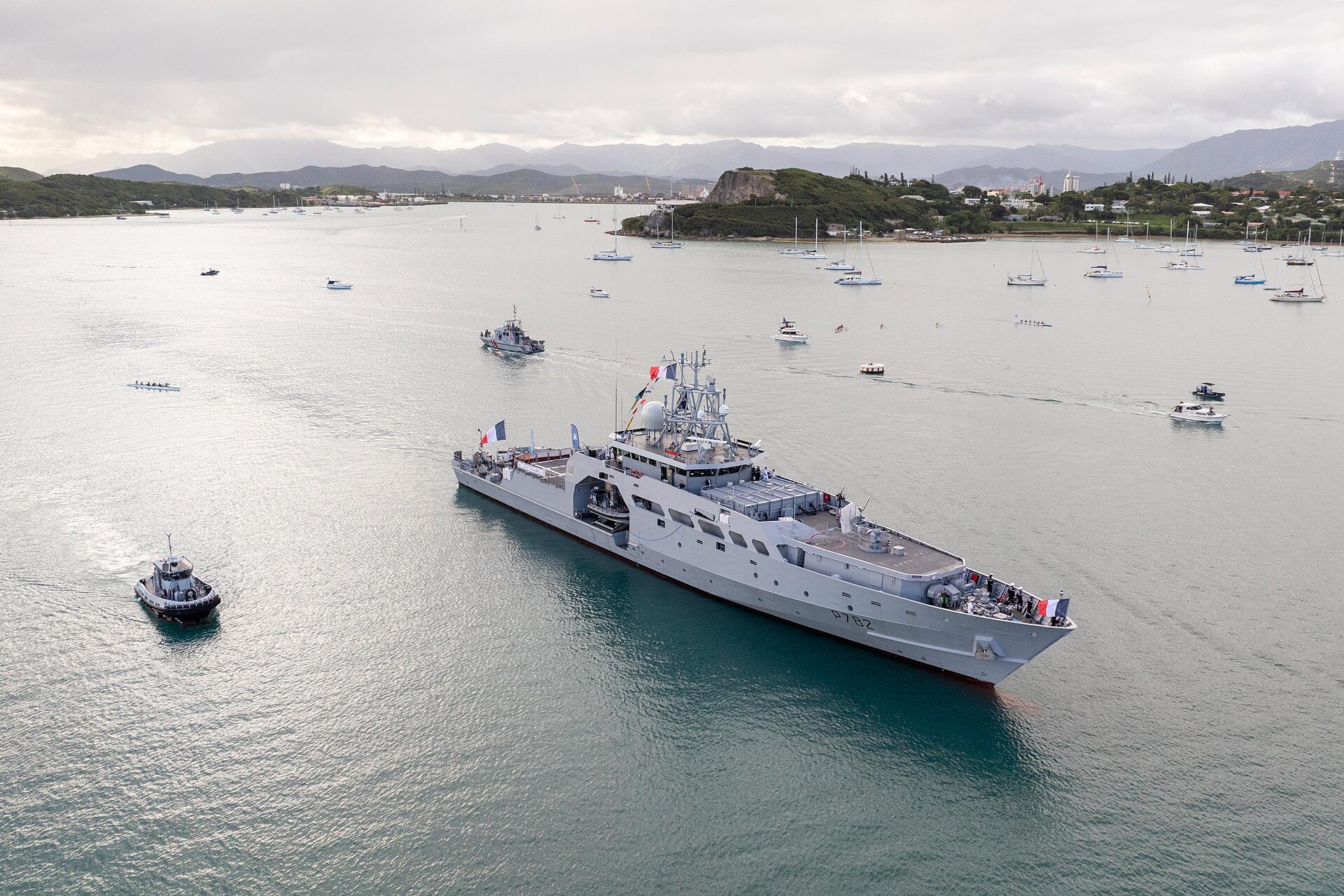
Japan–France security cooperation are seeing lively development, recently. For example, in July 2023, French fighter jets visited Japan for a joint exercise as a part of the Pégase 2023 series deployment. In April 2023, France organized La Pérouse a French Naval war game with the Quad countries, UK and Canada in the Indian Ocean. Japan and France are planning joint arms development such as the development of unmanned underwater vehicles.
There are three reasons why Japan focuses on France. Firstly, France is a Western country that shares the same national interest. Secondly, France is a regional country in the Indo-Pacific, and China’s activities are harming its national interests. France’s Indo-Pacific Strategy clearly mentioned that “over 1.6 million French citizens live in these overseas territories, while three-quarters of the French exclusive economic zone is the world’s, second largest is located in the Indo-Pacific”(3). But in this region, China is trying to create an independent movement in New Caledonia(4). And China is using sea line of communications near the Reunion Islands to carry grains from South America. That is why China’s infrastructure projects are focusing on this region and expanding influences. Thus, Japan and France share same national interests.
Thirdly, Japan-France cooperation is related with a new security system in this region. For a long time, a “hub and spoke” system has maintained order in the Indo-Pacific (Figure 7). In this system, the hub is the United States and the many spokes are US allies such as Japan, Australia, Taiwan, the Philippines, Thailand, and South Korea in the Indo-Pacific. A feature of the current system is that it heavily depends on the United States. For example, even though Japan and Australia are both US allies, there is no Japan-Australia alliance. However, China’s recent provocations indicate that the current system has not worked to dissuade its expansion.
As a result, a new network-based security system is emerging. US allies and partners cooperate with each other and share security burdens with the United States and among themselves. Many bilateral, trilateral, quadrilateral, or other multilateral cooperation arrangements, such as US-Japan-India, Japan-India-Australia, Australia-UK-US, India-Australia-Indonesia, Israel-India-UAE-US (I2U2), Quad, France-India-Australia, are creating a network of security cooperation. Therefore, security cooperation with France is a very important part for the security system in the Indo-Pacific. Now is the time for Japan-France or France-Quad security cooperation in the Indo-Pacific. ♦
(1) Ministry of Foreign Affairs of Japan, “Confluence of Two Seas,” August 22, 2007 (www.mofa.go.jp/); Shinzo Abe, “Asia’s Democratic Security Diamond,” Project Syndicate, December 27, 2012 (www.project-syndicate.org/).
(2) Ministry of Defense of Japan, “The Situation in the South China Sea (China’s Land Reclamation and Trends in Related Countries),” July 2022 (https://www.mod.go.jp/j/approach/surround/pdf/ch_d-act_b.pdf), slide 6.
(3) Government of France, “France’s Indo-Pacific Strategy,” 2021, p.3 (www.diplomatie.gouv.fr/).
(4) Field Michael, “China looms over New Caledonia vote on independence from France,” Nikkei Asia, December 7, 2021 (https://asia.nikkei.com/).



.jpg)